

Mon, October 5, 2026
Key Developments
September Employment Report
September job growth was weaker than anticipated. Payrolls rose 29,000, well below expectations for a 90,000 increase. Additionally, negative revisions for the previous two months totaled 60,000. The unemployment rate rose from 4.1% to 4.2%. Average hourly earnings maintained their modest pace, rising 0.1% versus the 0.3% estimate.
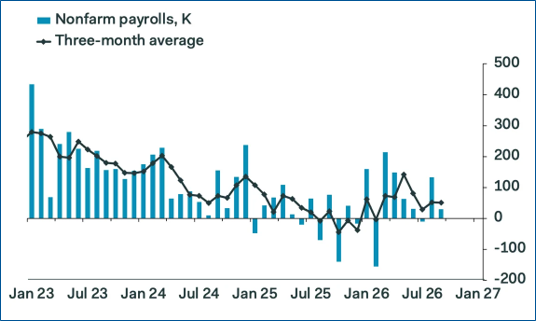
After the report, the probability of another quarter-point rate increase in October fell to around 20%. Bonds rallied sharply after the report but relinquished their gains by the end of the day. Yields finished the day higher across the curve.
Core PCE deflator lost momentum in July and August
The July Core PCE deflator (the Fed’s preferred gauge of inflation) was revised down from 3.34% to 2.98%, although the revision was due to recently implemented methodological changes. The August deflator rose 0.2%, leaving the rate unchanged at 3.0%.
Bond vigilantes in the Eurozone: French bonds in the spotlight
The Eurozone has also experienced a significant rise in bond yields over the last several weeks. However, the recent rise in French bond yields has been more dramatic due to several factors. French government debt has risen to 119% of GDP, while its budget deficit remains greater than 5% of GDP. The French government recently proposed a budget that contained $54bn in savings, a plan that was viewed as both underwhelming and unlikely to be implemented. In addition, there is a great deal of uncertainty related to the 2027 presidential election. Investors are requiring additional compensation - a fiscal and political risk premium - to hold French debt given these circumstances.
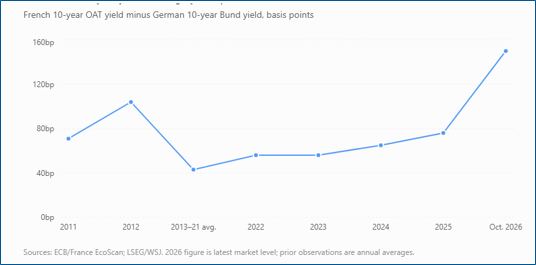
French 10-year bond (OAT) yields have risen approximately 0.70% since early September. Additionally, the spread between 10-year French OATs and German Bunds reached its highest level since the peak of the Eurozone sovereign-debt crisis.
A key question is whether stress remains concentrated in France or spreads to other highly indebted sovereign bond markets in Europe or affects broader financial conditions across the region.
Markets
U.S. stocks fell marginally for the week. The S&P 500 declined 0.25%, while the Russell 2000 Index of small companies fell 0.11%. The trend of weak breadth continued. Technology and utilities were the only sectors to deliver positive returns, while most other sectors declined between 1.8% and 2.7%.
The MSCI EAFE Index and MSCI Emerging Markets Index fell 1.51% and 1.23%, respectively. The U.S. dollar continued its rally, rising nearly 1% to its highest level since July.
The U.S. Treasury yield curve steepened as the 2-year yield declined slightly while 10- and 30-year yields rose. The generally bond-friendly economic data - weaker employment and moderating Core PCE - did not arrest the broader rise in bond yields.
This Week
Investors will likely remain focused on bond yields, especially in Europe. Minutes from the September FOMC meeting will be released on Wednesday.
Chart of the Week
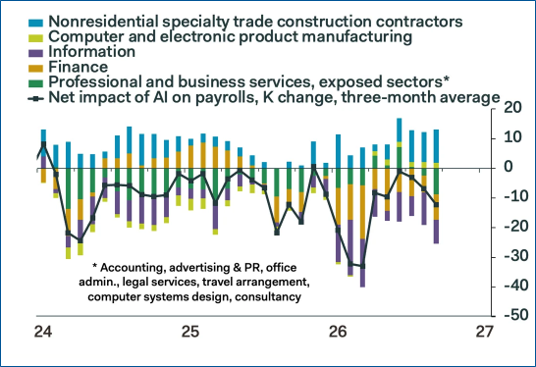
Is AI causing job losses? Thus far, it appears the data are inconclusive. The September employment report reaffirmed the trend of the last several months. On the one hand, sectors that are adopting AI more quickly continue to shed jobs. Payrolls in finance and information fell by 10,000 and 7,000, respectively. Conversely, sectors benefiting from the AI infrastructure buildout (e.g., data centers) saw payroll gains. Construction jobs rose by 11,000, led by growth in nonresidential specialty trade contractors.
Written By Brian Presti
--
Brian Presti, CFA®, Chartered SRI Counselor℠, is Chief Investment Officer and a shareholder at TFC Financial Management. He oversees the firm’s investment strategy, asset allocation, sustainable responsible investing, and portfolio management processes and leads the firm’s Investment Committee. Prior to joining TFC in 2023, Brian was Director of Portfolio Strategy at The Colony Group, Chief Investment Officer of Harvest Capital Management and an equity analyst and portfolio manager with DL Carlson Investment Group. He began his career in 1997. As CIO, he is responsible for evaluating investment managers and implementing portfolio strategies designed to support long-term client objectives.